Change From a Fiver: Five Penarth Charity-Shop Buys That Quietly Teach
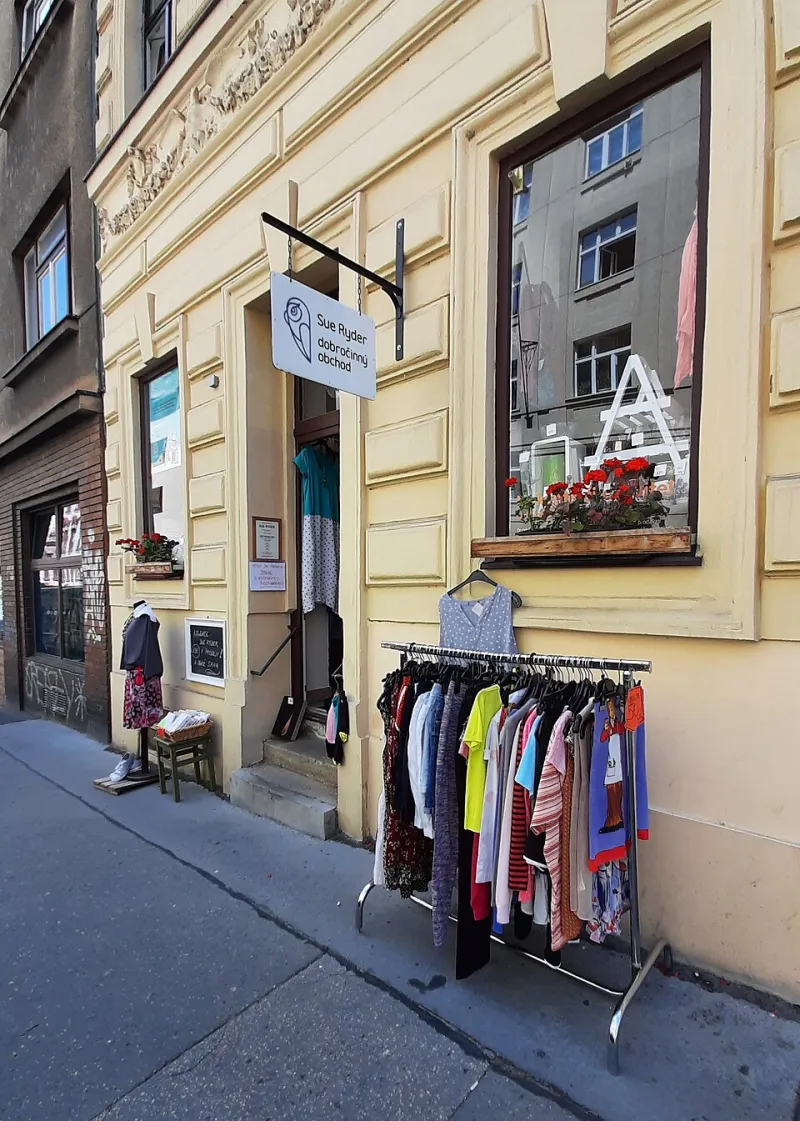
Photo: MAKY.OREL, CC0, via Wikimedia Commons
Penarth on a wet Saturday has a particular smell: damp coats, coffee, and the faintly dusty warmth of a charity shop. You go in for a paperback and come out with a brass object you cannot immediately identify. That object, it turns out, is a lesson plan.
The high street is full of them. Not the glossy, laminated kind, but the sort that arrive with a missing piece and a handwritten label in biro. Here are five finds you can pick up for the price of a round of coffees, and what each one can quietly teach a family on a Sunday afternoon.
1. The brass kitchen scales — maths you can feel
You will find them near the back, usually under a stack of teacups: a set of mechanical scales with a wobbly pointer and a dial in both pounds and ounces. Two or three pounds, often less.
Start by checking whether the pointer returns to zero when the pan is empty. It probably won't, which is your first lesson — calibration, friction, and why a machine can be honest but slightly out. Then set the family a guessing game. Fill a bowl with rice, ask everyone to estimate 200 grams by eye, and weigh it. The gap between guess and reality is always more interesting than the right answer.
Older scales usually speak in imperial, so you get a free conversion exercise: ounces to grams, pounds to kilos, and a conversation about why a generation of British cooks still think in ounces. If grandparents are nearby, ask them what they weighed and why. You have just turned an impulse buy into a history lesson with a pudding at the end.
Conversation starter: who do you think owned this, and what did they cook?
2. The folded map — geography on the kitchen table
Charity shops are oddly rich in maps. Old Ordnance Survey sheets of the Vale, dog-eared A–Z street atlases, the occasional walking guide with someone else's pencil notes in the margin.
Spread one out and find Penarth. Then find the pier, the Esplanade, Alexandra Park, the route up to the Kymin. Trace a walk to Cosmeston Lakes and work out how far it is using the scale bar and a piece of string. Contour lines are the sneaky bit: the closer together they are, the steeper the hill, which explains a great deal about pushing a buggy up certain streets in this town.
A map with a date on it is worth double. Ask what has changed. Where the marina now sits, what used to be there? Why does a road stop halfway? Compare it with the map on your phone and talk about what a paper map shows that a screen doesn't — and the other way round.
Conversation starter: if you were drawing a map of our street from memory, what would you leave out?
3. The board game with missing pieces — problem-solving and fairness
There is always a Monopoly with no thimble, or a Cluedo missing a suspect. Often the box is taped shut and the price has been slashed to a pound.
Buy it anyway. The missing pieces are the lesson. Set it up, discover the gap, and hand the problem to the children: invent a substitute. Cut a token from card. Write a new rule. Decide together whether the game is still fair, and what fairness even means when the rules have changed halfway through.
This is where siblings negotiate, where someone has to compromise, and where a nine-year-old discovers that writing a rulebook is harder than following one. It also teaches the quiet adult skill of making do — something a lot of us could practise more.
Tip: ask the volunteer behind the counter whether they'll knock a little off an incomplete game. Frame it honestly — you're buying it for the parts — and they will usually say yes.
4. The cassette tape — listening, patience and someone else's handwriting
Somewhere in Penarth there is a shoebox of cassettes waiting to be bought for 50p. A homemade mixtape, a story tape, a guide to learning French from 1991.
If you have a player, or can borrow one, listen to thirty seconds and write down what you hear. Not the words — the sounds. A cough, a dog, a door. Then read the inlay card and study the handwriting: the careful capitals, the crossed-out track, the dedication to someone called Sue. Someone made this by hand, in real time, and that is a strange and lovely thing for a child raised on instant playlists to sit with.
If you have no player, the tape still works as an object. Open the case carefully and look at the spools, the magnetic tape, the words 'chrome dioxide' on the label. Then record your own family tape on a phone, and make a paper inlay to go with it. Same skills, different machine.
Conversation starter: what would you put on a tape for someone you love, and why those five songs?
5. The sewing pattern — design, measurement and following instructions
Vintage paper patterns turn up regularly, usually for a pound or two: enormous tissue sheets folded into a yellowed envelope, with a diagram that looks like a treasure map.
You do not need a sewing machine to learn from one. Measure each other, then compare those measurements with the sizes printed on the envelope. The gap is a brilliant, slightly awkward lesson in how clothing sizes are invented and why they vary between shops. Trace a pattern piece onto newspaper, find the grainline arrow, and talk about why fabric has a direction. Even the notches and seam allowances are a lesson in why technical instructions are written the way they are.
Best of all are the patterns with the previous owner's pencil marks still on them — a hem shortened, a waist taken in. Someone stood where you are standing and made a decision. That is a small, human kind of history.
How to spot a lesson on the shelf
You don't need a teaching qualification, just a slightly different question. Instead of asking 'what is this worth?' ask 'what could this teach?'
Keep a few rules. Set a budget of a pound or two per item so the experiment stays cheap. Check for sharp edges and don't buy electricals you can't test in the shop. Wash your hands afterwards. And keep a 'lesson box' at home, so the finds have somewhere to live between rainy days.
The high street as a classroom
What makes this work in Penarth is not the objects, really. It is the fact that they are close by, cheap, and already carrying a bit of someone else's life. You are not buying a product; you are reusing something and, along the way, putting a little money into causes that matter locally.
The volunteers in these shops are often a goldmine of information. Ask where something came from. Ask what it was used for. You will occasionally get a story that beats any worksheet.
So next time the weather ruins a Saturday, take a fiver down to Windsor Road or Stanwell Road and see what the shelves offer. The curriculum is already there. It just needs someone to carry it home.