Letters That Outlived the Shops: A Penarth Family Ghost-Sign Safari
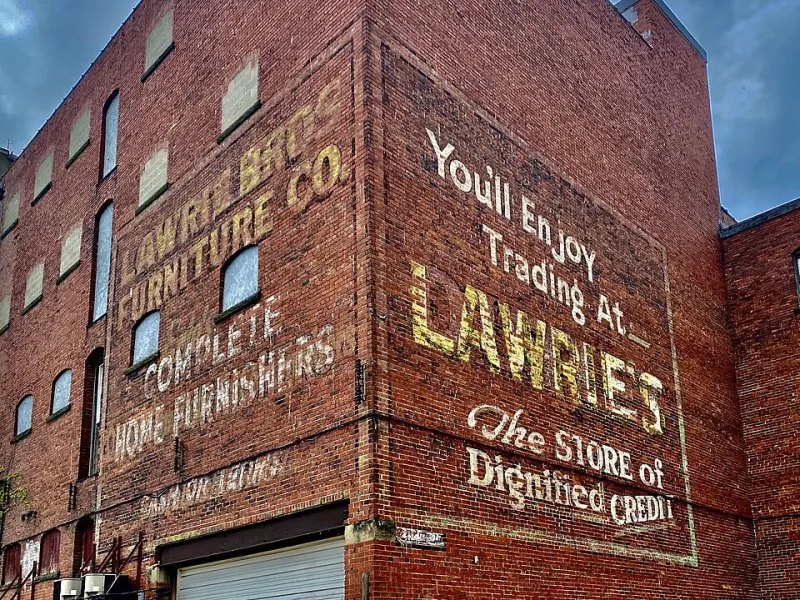
Photo: Andre Carrotflower, CC BY-SA 4.0, via Wikimedia Commons
Penarth is very good at hiding its homework in plain sight. You can walk the same stretch of pavement for years and never notice the faded letters above the awning, the old shop name painted directly onto brick, or the ghost of a phone number that once told customers exactly how to reach a business. This is a family walk for people who like looking up. No booking, no special kit, no need to know your serifs from your sans-serifs before you start.
Why painted letters still matter
A shopfront is a small public noticeboard. It tells you who sold what, how they wanted to be seen and what the street thought was worth advertising. When a business closes or changes hands, the sign often stays behind, softened by rain and sunlight. That is what people usually mean by a ghost sign: an old painted advertisement or shop name that has outlived the trade it described. Some are proper antiques. Others are only a couple of decades old but already look like archaeology because the shop below has changed beyond recognition.
For children, this is a brilliant introduction to local history because the evidence is at eye level — or just above it. You do not need a museum case. You need a pavement, a pencil and a bit of patience.
Start with a slow look, not a worksheet
Pick a short loop rather than a grand expedition. The older commercial stretches around Windsor Road, Stanwell Road and the side streets near Glebe Street work well, but the method travels anywhere. Walk on the same side of the road, stop every few shops and look above the ground-floor windows. Mid-morning light is often kinder than harsh afternoon sun. Keep children close to the wall side and away from kerbs, and remember that most upper floors are private property. Looking is fine. Climbing, touching or photographing through windows is not.
Ask one opening question: what did this building used to be? Then let the sign answer back.
A field notebook anyone can run
You do not need a printed booklet. Fold a sheet of A4 into four columns and give everyone a pencil. A simple grid works for adults and children alike:
- Where: the street or nearby landmark.
- Words I can read: even fragments count, such as a surname, a trade or the word Est.
- Letter clues: thick or thin strokes, capitals, curves, shadows, gold paint, missing letters.
- Date clues: old phone number, currency, titles, shopkeeping words, building style.
- One question: who might have stood here, and what were they buying?
Let younger children draw the shape of a sign rather than write a description. Let older children invent a name for a shop that might open in the same unit in 2026. The notebook is not a test. It is a way of slowing everyone down enough to notice.
How to read letterforms without a typography degree
You can learn a lot from a sign by asking how the letters are made. Hand-painted lettering often has slight variations in thickness and spacing because a person made it with a brush. Vinyl lettering tends to look more uniform and may sit on a flat panel rather than directly on brick. Serif letters have small feet or finishing strokes at the ends of their lines; sans-serif letters do not. All-capital signs can feel formal or old-fashioned, while mixed-case lettering often feels more modern and conversational.
Gold lettering is its own clue. Real gold leaf was expensive and was used to signal pride, permanence or a certain kind of trade. Faded gold may now look brown or yellow, especially where the size — the sticky layer beneath the leaf — has worn away. Shadows and outlines were practical tricks: they made letters stand out from brick or dark paint. A sign with several layers of paint is a palimpsest, which is a fancy word for a surface that has been written on more than once.
Dates are trickier. A sign saying Est. 1898 gives you a starting point, not the date of the paint. Old phone numbers are useful: short local numbers, exchanges named after places or numbers without a dialling code all suggest an earlier era. Pre-decimal prices, older company titles such as & Sons, and words like Telephone written out in full are all gentle hints. Treat every clue as a question, not a fact. That is half the fun.
Golden letters and the stories between them
A good ghost sign is not just a design relic. It is a reminder that the high street has always been a work in progress. The grocer becomes a charity shop; the hardware store becomes a café; the painted advertisement for a long-gone brand survives above a unit that now sells phone cases. Children often spot the human details first: a name that sounds like a neighbour, a word they have never heard, a date that feels impossibly distant.
That is where the learning quietly happens. Families are reading, comparing, guessing, drawing and arguing politely about whether a letter is an O or a Q. They are also learning that towns are layered. The past is not sealed off in a book. It is above the bus stop.
The 2026 angle
In 2026, our high streets are being reshaped by online shopping, changing work patterns and the constant reinvention of small units. That makes surviving shopfront lettering more interesting, not less. It asks us what we want to keep, what we are happy to paint over and what a future sign might say about us. A family can photograph a faded advertisement, sketch its best letter and then design a new shopfront for the same building using one old letterform and one thoroughly modern idea. The results are usually daft in the best way.
If you want to make the walk last, start a small household archive. Date each photo, note the street and write down one thing you noticed. A local library or community group may welcome copies, but even a kitchen drawer album is a useful record. The point is not to become a sign historian overnight. The point is to show children that ordinary streets are worth reading closely.
So next time you are in town, look up. The letters are still there, doing their quiet teaching.