Knots, Tides and Tea: The Lifeboat Station Lesson That Fits in a Coat Pocket
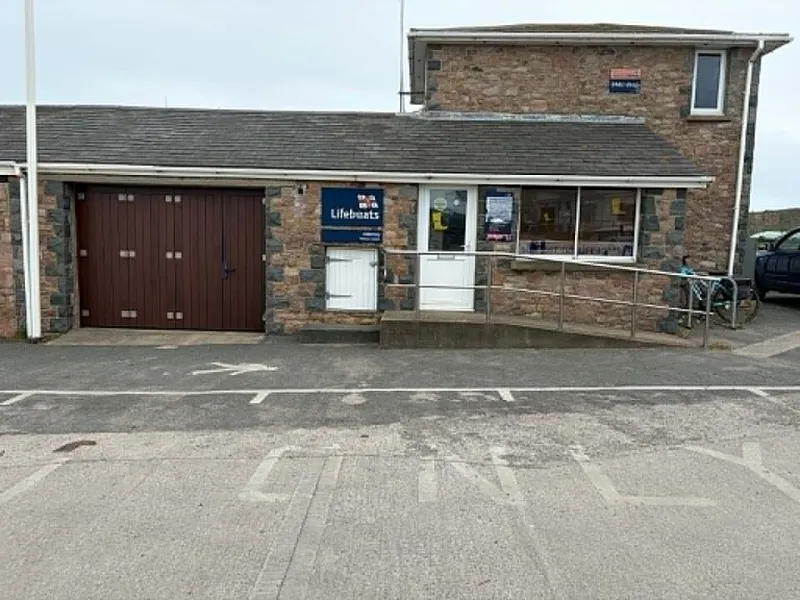
Photo: Margaret Storer, CC BY 4.0, via Wikimedia Commons
On a bright, cheek-aching Saturday this month, we found ourselves at Penarth Marina with no plan beyond a flask and a vague promise of chips. The lifeboat station was open to visitors, so we wandered in — and accidentally had one of the best family learning afternoons of the year. Not a museum visit. More like a lesson plan without worksheets, delivered by people who know the Bristol Channel the way the rest of us know our own kitchen cupboards.
If you go, check opening times first: stations are working buildings, not attractions. But when the doors are open, there's a lot to look at. And, as we discovered, a lot to count, tie, question and try at home.
The first sum is a question: is it safe?
Before anyone launches anything, somebody has to decide whether going out is sensible. That's risk assessment, and it's quietly full of maths. What's the tide doing? How strong is the wind? How cold is the water? How long will the light last?
At the station, the tide table is not decoration. It's a timetable for the sea. High water at a certain time, low water at another, and a height in metres that means something to people who read it every day. We stood in front of it and tried a simple family version: if high tide is at 3pm, when would we need to be off the rocks? What does a 0.4m difference actually look like on the beach? The children were much better at guessing than the adults.
At home, you can do this with any local tide table — online, in a paper diary, or on the harbour wall. Pick a day, read the heights, and ask: what would we plan around this? It's arithmetic with consequences, which is a very different thing from arithmetic on a worksheet.
Knots are geometry you can hold
Then came the rope. A volunteer showed us a bowline, then a figure-of-eight, then something that looked like a magic trick and turned out to be very practical. The children had a go. The adults had several goes and pretended the first attempt was a warm-up.
Knots are applied geometry. Loops, crossings, tension, the difference between a bend and a hitch. You don't need the vocabulary to start; you just need a piece of old rope and a patient person. We came away with two knots we could actually remember and a new respect for anyone who can tie a bowline in the dark, on a moving boat, with cold hands.
Try this at home with a shoelace or a length of washing line. Learn one knot properly. Then time yourselves tying it with gloves on. That's teamwork, fine motor skills and a small lesson in why practice matters — all before teatime.
The quiet arithmetic of turning up
The bit that stayed with me wasn't the boat or the kit. It was the rota. A lifeboat station isn't just a building with a boat in it; it's a list of people who are willing to stop what they're doing when a pager goes. That means training hours, cover, fundraising, cleaning, checking, and all the unglamorous arithmetic of volunteering.
We talked about that on the walk back along the Esplanade. How many people does it take to keep a service running? How many hours are in a year, and how many of them does someone give? What does 'on call' actually mean for a family? The children were interested in the pager; the grown-ups were interested in the tea rota. Both are part of the same sum.
What we took home
We didn't leave with a worksheet. We left with a tide table, a length of rope from the car boot, and a new family rule: before any beach walk, we check the tide together. It takes two minutes and has already made us feel less like spectators and more like people who live near the sea.
At home, we've added a few small rituals:
- Tide-check Tuesday. We look at the week's tides and pick one walk that fits. The children read the heights; the adults check the weather.
- One-knot week. We each learn a single knot and teach it to someone else. Bad attempts are allowed. Laughing is mandatory.
- The 'what if' game. On any outing, ask: what's the one thing that could go wrong here, and what would we do? It's risk assessment without the clipboard.
- Teamwork challenge. Build something together — a flat-pack shelf, a den, a sandwich — and nominate a checker. The checker's job is to spot the mistake before it becomes a problem.
None of this is a substitute for proper safety advice, and none of it needs to be. It's just a way of noticing that the coast is full of people using everyday maths, science and local knowledge to keep other people safe. That's a lesson worth borrowing.
A classroom with a lifeboat in it
Penarth is lucky to have a working lifeboat station on its doorstep, and luckier still to have the volunteers who make it work. As a family learning idea for 2026, it's hard to beat: free (though donations are welcome), local, hands-on, and genuinely useful. You come away knowing a little more about tides, ropes, risk and the quiet arithmetic of community. You also come away with wet shoes and a strong urge for chips.
Check the station's opening times before you go, be respectful of operational areas, and ask questions when there's someone free to answer them. Then go home and tie a knot. The sea will still be there tomorrow, and so, thankfully, will the people who watch it.