Six Seats, Six Stories: A Slow Learning Walk Along Penarth's Promenade
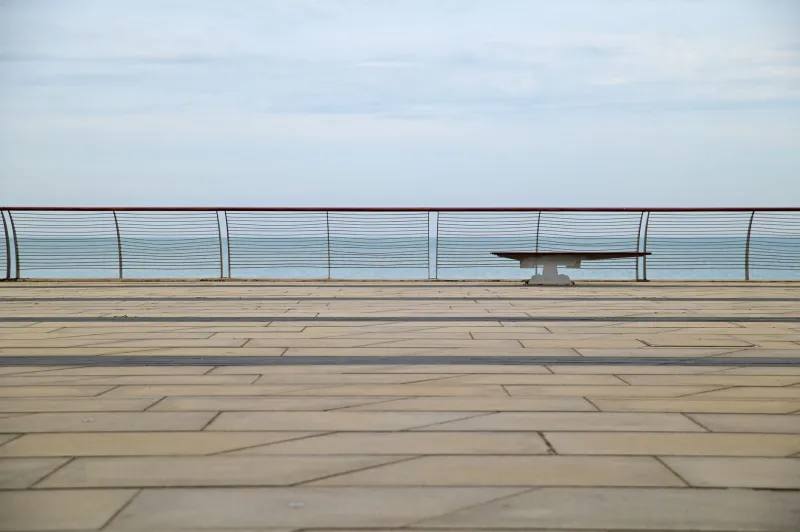
There is a particular kind of learning that happens when nobody says the word 'lesson'. It arrives while you are walking the Promenade with a flask in your bag and a child asking why one bench has a little brass plate and another has none at all. Penarth's seafront is full of these small openings. You just have to sit down long enough to notice them.
This is not a formal trail with clipboards and timetables. It is a family-friendly way to spend an hour or two along the Esplanade and the cliff path, using benches as stopping points. Each seat gives you a question, a bit of looking and a reason to talk. The walk works for grandparents, teenagers, curious seven-year-olds and anyone who secretly likes reading other people's dedications.
Start with the seat, not the plaque
Most of us walk past benches without seeing them. They are background furniture: green slats, stone legs, a bin nearby, a gull watching for crisps. But a bench is a tiny piece of public design. It tells you who the council thought might need to rest, which view was considered worth preserving, and what kind of sitting was expected. Backrest or no backrest? Facing the sea or facing the town? Wide enough for a pushchair or built for two? These are design decisions, and they are surprisingly good conversation starters.
Before you set off, agree on a simple family rule: at each bench, one person asks the question and everyone else has a go at answering. No right answers required. If someone says 'because it looks nice', that counts. Then move on.
Seat one: the pier-end bench
Begin near the pier, where the seafront feels most theatrical. Find a bench with a view back towards the town and ask: what would this spot have sounded like a hundred years ago?
Penarth's pier has been a place of arrivals and departures, promenading and paddle-steamers. Children can imagine the shouts of dock workers, the clatter of the pier train, the slap of water against the legs. Older family members might remember their own version of the seafront. The bench becomes a listening post for layers of history that are not written down anywhere.
Learning prompt: draw the view in three lines only. What did you leave out, and why?
Seat two: the dedication bench
Somewhere along the Esplanade you will find a bench with a small engraved plate. Read it slowly. These dedications are short, often funny, sometimes heartbreaking. They are also a masterclass in concise writing.
Ask everyone to invent a six-word dedication for a bench they would like to sit on one day. It might be for a person, a dog, a favourite chip shop or a football team. Then talk about why we put names on public things. Is it to remember, to claim, to thank, or simply to say 'we were here'?
Learning prompt: what is the difference between a memorial and a message?
Seat three: the cliff-path bench above the bay
Climb a little further, where the path narrows and the view opens out. This is the bench for noticing weather. Look at the water, the clouds and the way other people are dressed. Ask: how does this seat change with the seasons?
In winter it is a place for brisk five-minute stops. In summer it is a picnic perch. The bench itself does not change, but the way we use it does. That is a gentle lesson in how public spaces adapt to ordinary life, long after the designer has gone home.
Learning prompt: if you could add one thing to this bench to make it better for winter, what would it be? A windbreak? A cup holder? A tiny roof?
Seat four: the park bench with a past
Turn inland for a few minutes and find a bench in one of Penarth's parks. Alexandra Park is a good place to start, but any green space will do. Park benches are often older than they look, and they carry the marks of use: smoothed armrests, faded paint, a repaired slat.
Ask the youngest person in the group to describe the bench using only three words. Then ask the oldest to describe it using three different words. The gap between those lists is often funny and revealing. It is also a lesson in perspective.
Learning prompt: what would this bench say if it could review the last ten years?
Seat five: the bus-stop bench
Not every learning seat has a sea view. A bus-stop bench on Stanwell Road or near the town centre is a brilliant place to study people in a hurry. Sit for ten minutes and count how many people check their phones, how many look at the timetable, how many say hello.
This is observational learning, the kind that builds empathy without a worksheet. It also teaches children that public furniture is not just for leisure. Some benches are waiting rooms, some are offices, some are places to eat lunch alone without feeling odd.
Learning prompt: design a bench for people who are waiting. What would it need?
Seat six: the bench you would add
The final stop is imaginary. Walk until you find a spot with a good view but no seat at all. Ask: if Penarth could have one new bench here, what should it be like?
This is where the walk turns from looking to making. Sketch it, argue about it, decide where it would face. Would it have a back? A small table? A carved animal? A plaque for someone who never got one? The best answers are usually the ones that make everyone laugh and then think.
Learning prompt: who is missing from Penarth's benches, and how would you make a seat for them?
Bring a pencil, leave the clipboard at home
You do not need to do all six seats in one go. Two benches and a bag of grapes is a perfectly good morning. The point is not to complete a trail. It is to practise a habit: treating ordinary places as if they have something to teach us.
Penarth's seafront is free to walk, free to sit and free to argue about whether the pier looks better from the left or the right. That is a curriculum of sorts. It just happens to come with a sea breeze and no homework. Wrap up warm, bring a pencil if you like, and let the benches do the talking.