Shore Detectives Wanted: Penarth’s One-Hour Family Rock Pool Count
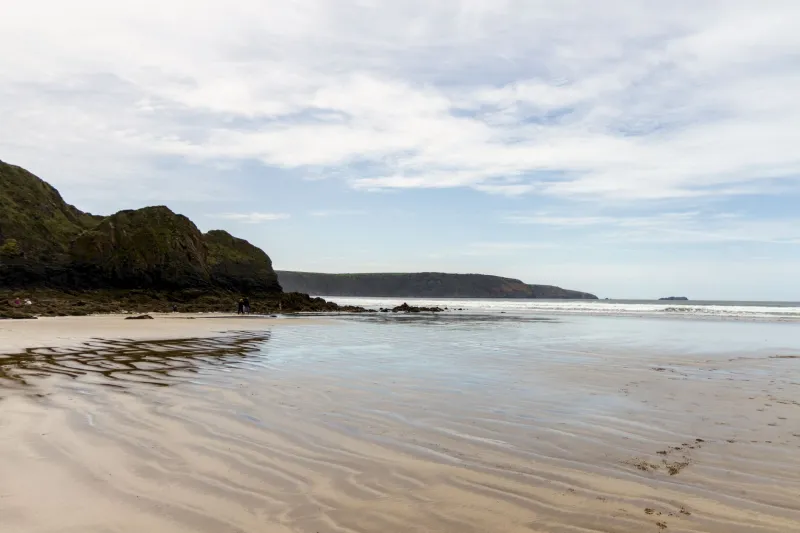
As we head deeper into November 2026, the beach may not look like a classroom. The wind has a bite, the light comes and goes, and the promenade is more woolly hat than sun cream. But low tide still exposes a narrow, busy world along Penarth’s edge – and it is one of the best free lessons in town.
A rock pool bioblitz does not need special kit, a booking form or a qualified teacher. It needs a falling tide, an adult who keeps half an eye on the sea, and a family willing to look slowly. One hour is plenty. In fact, one hour is probably the right amount before cold hands and short attention spans take over.
Why rock pools make such good teachers
Rock pooling is observation with consequences. You cannot rush it. You have to crouch, wait, notice a shell that is not a shell, and work out whether the thing under the seaweed is a crab, a shrimp or just a very confident bit of grit.
It is also classification without the worksheet dread. Families can sort finds into simple groups: shelled things, leggy things, tentacled things and seaweed. That is real science behaviour – noticing difference, grouping by feature, and changing your mind when something does not fit. And because the creatures are alive, there is a built-in lesson in care. Look, record, return. Nothing goes home in a bucket.
The citizen science bit matters too. A few notes from one family may not feel like much. Put together with records from other people along the coast, though, they help build a picture of what is living where. That is the quiet magic of a local wildlife log.
Pick your patch: three Penarth shoreline spots
Penarth Pier foreshore. The easiest starting point for younger children. You get a mix of sand, stone and shallow water, and there are plenty of places to stop for a breather. Stay clear of the pier legs and keep an eye on the tide. This is a good spot for a first recce.
The rocky shelf towards Lavernock. A short hop along the coast and worth the extra effort for older children and adults who can scramble a little. The crevices are richer, but the ground is uneven and slippery. Check access and tide times before you set off, and do not wander beneath cliffs.
Lavernock Beach. Another nearby option when the tide is low and the weather is playing ball. It is not Penarth proper, but it is close enough for a family outing and gives you a different stretch of shore to compare with the pier. Record where you were – even a rough note like ‘east of the slipway’ is useful.
Wherever you go, the rule is the same: arrive on a falling tide, not a rising one. Give yourself more time than you think you need to get back.
The one-hour plan
0–10 minutes: safety and survey. Check the tide again. Point out the seaward limit for children and make it clear that nobody goes past it. Hand out the tub, spoon, magnifier and checklist.
10–30 minutes: slow search. Pick one small patch – a couple of metres is plenty – and look properly. Lift one stone at a time, look underneath, and put it back exactly as you found it. Peer into cracks. Watch for movement rather than grabbing.
30–45 minutes: record. Write down what you saw, roughly how many, and where. ‘Three limpets on the north side of a big stone’ is a perfectly good record. Tick the checklist. Take photos if you have a phone, especially of anything you cannot identify.
45–60 minutes: return and upload. Put everything back, wash hands, and send your records to a local wildlife log or recording scheme. If you are not sure what you found, say so. ‘Unknown crab, small, brown’ is still a record.
What you might find
Common shore sightings include limpets, periwinkles, barnacles, mussels, dog whelks, shore crabs, hermit crabs, prawns, beadlet anemones and a tangle of seaweeds such as bladder wrack. In November you may see less bustle than in high summer, but the shore is still working. Empty shells count too – just note that they are empty.
Encourage children to group finds by what they can see: shell, legs, tentacles, seaweed. If something is unknown, draw it or photograph it. The checklist is there to help, not to turn the trip into a test.
Safety first, always
Check tide times before you leave and keep checking them on the beach. Never turn your back on the sea. Wear grippy shoes – no bare feet – and watch for slippery seaweed. Supervise children closely, especially near deeper pools and wet rocks. Use a spoon or soft brush rather than fingers for delicate creatures, and do not handle crabs carelessly. Wash hands afterwards. Leave everything where you found it, put stones back, and take litter home. If the weather turns, go. The shore will still be there next time.
Your printable shore detective checklist
- ☐ Tide times checked and falling tide confirmed
- ☐ Adult in charge and seaward limit agreed
- ☐ Grippy shoes and warm layers
- ☐ Clean tub, spoon, magnifier and pencil
- ☐ Phone or camera for photos
- ☐ Hands washed after the session
- ☐ Stones returned and nothing taken home
- ☐ Records uploaded or saved
Creature tick list: limpet, periwinkle, barnacle, mussel, dog whelk, shore crab, hermit crab, prawn, anemone, seaweed, empty shell, mystery find.
Send your findings somewhere useful
A local wildlife log, a county records centre or a recording app all work. In south Wales, SEWBReC is the South East Wales Biodiversity Records Centre, and schemes such as iNaturalist can also be useful for photos and identification. Keep location notes simple but specific. Avoid giving precise public locations for anything sensitive; for common rock pool creatures, a general beach name is usually enough.
The real point is not the perfect record. It is the habit of looking. One hour on Penarth’s shore can teach observation, classification and care without anyone saying the word ‘lesson’. Take a tub, take a pencil, and let the tide set the timetable.