Sea Walls and Story Steps: A Family Learning Walk Around Penarth's Edge

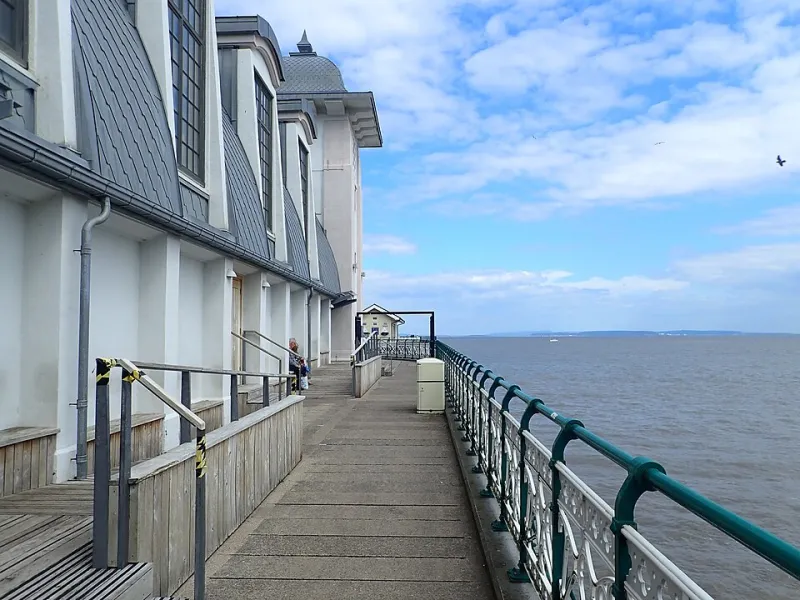
Photo: family walking Penarth Pier Esplanade seafront Wales autumn, via c8.alamy.com
Penarth has a habit of putting its best classroom right in front of us. On a bright November morning in 2026, the Bristol Channel can look like a sheet of hammered silver, the pier stands out against the sky, and the cliffs hold thousands of years of story in their layers. You do not need a booking, a badge or a term fee to learn here. You just need a walk, a notebook and a bit of curiosity.
This is a self-guided family learning trail along Penarth's edge. It is not a formal course and it is not a worksheet strapped to a clipboard. Think of it as a promenade syllabus: a loose route with prompts that help children and adults notice more, ask better questions and collect small observations to take home.
Why the seafront works as a syllabus
The coast is a natural cross-curricular classroom. Geography is in the tide line and the cliff face. Science is in the gulls, the rock pools and the weather. History is in the pier, the railway town and the way Penarth grew as a seaside resort. Maths is in estimating distances, counting birds and reading tide tables. Art and literacy are in sketching, describing and storytelling.
Best of all, it is local. A family can do a short version in forty minutes or a longer version over a morning. There is no kit list beyond a pencil, some paper and a phone camera. That matters in a year when plenty of us are watching budgets and looking for things to do that feel generous rather than expensive.
The route: pier, promenade and cliff path
Start at Penarth Pier Pavilion. It is an easy meeting point, with toilets and a café nearby, and it gives the walk a clear beginning. From there, head along the Esplanade, keeping an eye on the tide and the weather. If the beach is safe and accessible, a short section on the sand adds another layer. If not, stay on the promenade and use the view.
For families with buggies or wheelchairs, the Esplanade and pier area offer the most straightforward option. The cliff path toward Lavernock is beautiful but uneven in places, so choose it only if everyone in the group is comfortable with that. Check tide times before you set out, keep well back from the cliff edge, and never climb on loose rock. The learning trail should feel like an adventure, not a risk assessment.
Five stops and prompts
1. The pier and the horizon
Stand where you can see the pier legs and the open water. Ask: how far away is the horizon? How many colours can you count in the sea? For older children, estimate the height of the pier above the sand and then check your guess. For younger ones, find three things that are moving and three things that are still.
2. The Esplanade railings
This is a good wildlife spotting stop. Look for herring gulls, cormorants and oystercatchers. Keep a simple tally of birds you see in five minutes. Talk about why some birds stand on one leg, why others dive, and why we should not feed gulls. A phone photo of a bird in the distance can become a identification challenge back home.
3. The beach and the tide line
If you can safely reach the sand, look at the debris line left by the tide. What has the water brought in? What has it taken away? Draw the shape of the shoreline in your notebook. For maths, pace out ten metres and count how many steps it takes. For science, compare wet sand and dry sand.
4. The cliff face
From a safe distance, look at the layers in the cliffs. Penarth's coastline is a geology lesson in itself, with bands of rock and mudstone that tell of ancient environments. Ask: what do the lines look like? Are they straight, wavy or broken? If you find a fossil, look and photograph it rather than hammering it out. The best learning here is careful observation.
5. A bench with a view
End with a sit-down. Ask everyone to write three words about the sea, draw one thing they noticed, and share one question they still have. This is the collecting part of the trail, and it works for all ages. A four-year-old might draw a gull. A teenager might photograph the pier legs. An adult might finally look up the name of that bird.
Make it work for different ages
For early years, keep it sensory: colours, sounds, textures and simple counting. For primary-age children, add a tally chart, a sketch map or a five-question quiz. For teenagers, lean into photography, data collection or a short debate about coastal erosion and sea defences. Adults can join in properly rather than hovering at the edges. The point is not to test anyone. It is to learn together.
Pack light and tread carefully
Take a pencil, a small notebook, a phone, water and layers. Check the tide and the forecast. Wear shoes with grip. Follow local safety signs and keep dogs under control where needed. Take your litter home, and leave shells, stones and wildlife where you find them. A good learning walk should leave the place as interesting as it found it.
Turn one walk into a habit
The real value comes from going back. Repeat the same route in December, then in spring. Compare the light, the birds and the waves. Keep a family learning journal with sketches, photos and one question per visit. Over time, the promenade becomes a familiar text that your family can read again and again.
This is the kind of learning Penarth Learning Community is here for: local, generous and open to everyone. No enrolment form, no term fee, no pressure. Just sea walls, story steps and a family willing to look a little closer.