The Classroom Under Our Feet: Five Penarth Buildings With Hidden Teaching Pasts
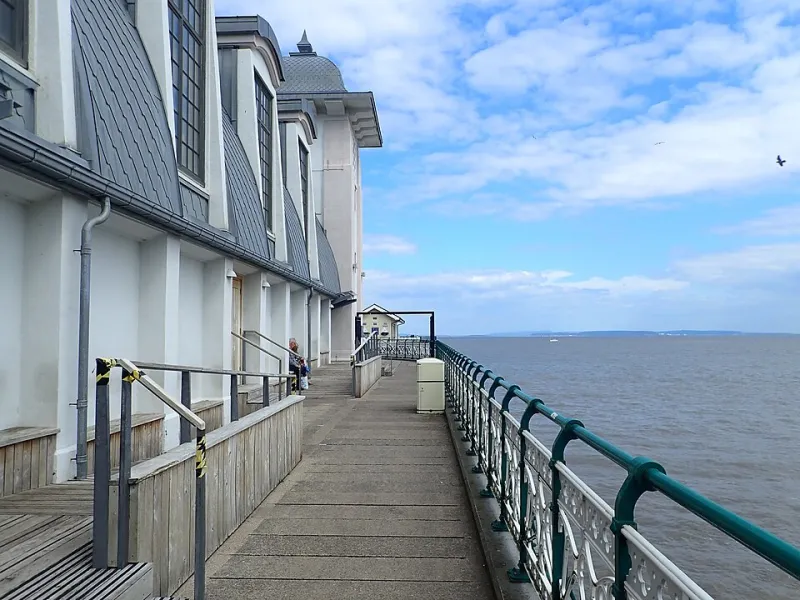
Photo: Eirian Evans , CC BY-SA 2.0, via Wikimedia Commons
Walk through Penarth on a normal Saturday and the buildings look like scenery. The Pavilion on the pier, the gallery on Plymouth Road, the library on Stanwell Road, the hall where the pantomime happens. We pass them so often we stop seeing them.
But a town like this accumulated its buildings for reasons, and a surprising number of them spent their early decades doing something educational — sometimes formally, sometimes as a side effect of being the only large room in town. What follows is not a definitive architectural survey. Parish records are patchy, memories fade and dates shift by a decade depending on who is telling the story. Treat it as a starting point for a family afternoon, not an exam.
1. The Pier Pavilion: the seaside lecture theatre
When Penarth Pier was built at the end of the nineteenth century, the pavilion attached to it was never just a shelter from the rain. Seaside resorts of that era sold themselves on self-improvement as much as donkey rides, and the pavilion circuit carried concerts, lantern lectures and talks aimed squarely at visitors with time on their hands and a desire to go home slightly better informed.
Later decades brought cinema, dancing and the long stretch of decline and restoration that most locals know about. Through all of it, the building kept its basic shape: a big room designed to hold a crowd and tell it something.
How to learn from it today: take the children down on a breezy afternoon and set them a simple task — find three features of the building that look Victorian and three that look modern. The restoration work itself is a lesson in materials, funding and stubbornness.
2. Turner House: art with the door left open
The gallery on Plymouth Road arrived in the late 1880s through the philanthropy of James Pyke Thompson, a Cardiff businessman who collected art and, unusually for the period, believed the public should be able to see it without paying or proving themselves worthy. The house was designed with display in mind, and its Sunday openings became a quiet form of adult education long before anyone used that phrase.
How to learn from it today: most of us walk past galleries assuming we need to know how to look. You do not. Give each person in your group one painting to describe out loud without using any colour words. It is harder than it sounds, and it turns a polite wander into an hour of close attention.
3. Penarth Library: the borrowed building that paid for itself
Carnegie money built libraries all over South Wales, and Penarth's arrived in the early years of the twentieth century with the usual conditions attached: a site provided by the town, a commitment to free access, and a building designed to feel like an invitation rather than a gate.
What is easy to forget is how much of the town's learning infrastructure ran through that one room. Reading rooms, evening classes, reference desks that answered questions for people with no other way of finding out. Before the internet, this was the internet.
How to learn from it today: go in as a family and ask a librarian a genuinely difficult local question — what did this street look like in 1910, who lived in that big house, when did the pier last close. Watching an adult hunt down an answer in a real source is a better research lesson than any worksheet.
4. The Paget Rooms: night school with a stage
Public halls were the workhorses of Victorian and Edwardian learning. They hosted lectures, debates, choral societies, temperance meetings, adult education classes and the kind of travelling speakers who turned up with a magic lantern and a topic. In a town without a university, the hall did the job.
How to learn from it today: look at a local events listing and pick one thing you would not normally choose — a talk on a subject you know nothing about, a choir you are not qualified to join. Go once, with no commitment to return. That is precisely what the original audiences were doing.
5. The old schoolroom by the parish church
Scattered through Penarth are buildings that began as church or charity schools, teaching reading and scripture to children whose families could not have afforded anything else. Some are now houses, some are halls, some have been absorbed into later schools. The fabric gives clues: tall windows for daylight, a single large room, a door placed to separate boys from girls.
How to learn from it today: this is where an oral history project earns its keep. Ask an older relative or neighbour what their classroom was like — the heating, the desks, the punishments, the walk to school. Record it on a phone. Twenty minutes of someone's memory is worth more than a plaque.
Turning the town into a timetable
If you fancy making a proper afternoon of it, the five sites above sit within a walkable loop, with the steep bit between Lower and Upper Penarth doing the hard work in the middle. Go slowly, stop often, and accept that a six-year-old will be far more interested in a drainpipe than a date stone.
A few practical notes. Check opening hours before you set out, because galleries and halls keep strange ones. Wear something that can cope with a sea breeze on the pier. Take a notebook rather than relying on photographs — writing something down fixes it in a way that a camera roll does not.
And if you find a fact that contradicts one of the stories above, good. Chase it. Ask at the library, look up the county archives, corner someone who has lived here since the 1960s. That is what a living classroom actually looks like: not a building with a lesson in it, but a town full of people who keep asking what happened here and why.