The Dark Is a Classroom: Four Weeks of Family Stargazing in Penarth
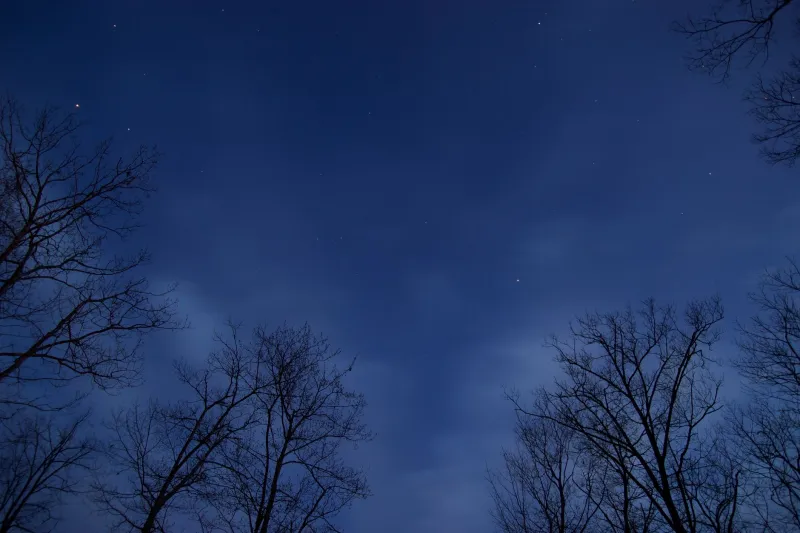
There is a particular kind of quiet that settles over Penarth on a clear November evening. The promenade empties earlier, the pier lights come on, and the sky does the thing it has been doing for ever: it fills up with stars. The only difference is that now, at half past five, we are awake to see it.
This month, instead of treating the early dark as something to hurry through on the way home, why not treat it as homework? Not the worksheet kind. The stand-at-the-window-with-a-flask kind. A four-week family night-sky journal costs almost nothing, needs no special equipment, and teaches observation, patience, a little science and a surprising amount about the place we live.
Why November does half the work
You do not need to stay up late to stargaze in Penarth in November. Tea-time is dark enough for the first stars to appear, and by early evening the brighter constellations are already putting in a shift. Orion begins to make its appearance later in the evening as the month rolls on, while Cassiopeia – that wonky W shape – is often easy to find overhead. The Plough is lower in the northern sky, but still recognisable when the cloud allows.
This is also a good time to notice how much light our town sends upwards. Penarth is not a dark-sky reserve, and that is fine. The point is not to chase perfect darkness. The point is to look, notice, compare and wonder. A street lamp, a bedroom curtain and a bright phone screen all become part of the lesson.
The kit is smaller than a lunchbox
You do not need a telescope. In fact, starting without one is often better, because it keeps the focus on looking rather than fiddling. A small notebook, a pencil, a red torch or a torch covered with red cellophane, warm layers and a flask will see you through. Binoculars are a bonus, not a requirement. A free star chart or a simple night-sky app can help, but keep phone use brief and dim – bright screens spoil your night vision and everyone else’s.
If you are observing from a garden, doorstep or window, tell someone where you are. Stick to safe, familiar ground. Avoid cliff edges, unlit paths and isolated spots after dark, and respect any seasonal closures on the pier or promenade. The best family stargazing is often the least adventurous: a back step, a shared blanket and ten minutes of looking up.
Week one: find three familiar friends
Start with three easy targets rather than a whole constellation atlas. Cassiopeia is a good first hunt. So is the Plough, if you have a clear northern view. And the Moon, when it is visible, is never a disappointment – even a quick look reveals craters, bright patches and the soft edge where light meets shadow.
Ask each person to draw what they see, not what they think they should see. A wobbly W is perfect. A Moon drawn as a circle with three smudges is perfect too. Label the date, time and weather. This is real science behaviour: record what is actually there.
Week two: become a light detective
One evening, turn the journal towards light pollution. From a window, garden or safe doorstep, count the lights you can see. Note whether they are street lamps, security lights, shop signs or windows. Which direction are they in? Can you see stars near them, or do they wash out the sky?
There is no need to turn this into a lecture on energy waste. Let the questions do the work. Why do some lamps throw light upwards? Which lights help us feel safe, and which simply shine into bedrooms? What might a hedgehog or a moth make of all this? If the weather is grim, do the same survey inside: count the lights in your home, check which curtains let light escape, and draw a plan of your street from memory.
Week three: stories, science and made-up constellations
Stargazing is not only astronomy. It is storytelling, navigation, history and imagination. Look up the Greek myths if you like, or the Welsh stories that fit the season. Better still, invent your own Penarth constellations. The Pier. The Seagull. The Community Fridge. The Lost Glove. Give each one a shape, a story and a reason to be remembered.
This is also the week to ask around. Penarth has plenty of quiet sky-watchers – the neighbour with binoculars, the grandparent who knows the Moon’s phases, the dog-walker who always seems to be looking up. A short conversation can turn a private hobby into a shared one. You do not need an expert. You need someone who has noticed something and is willing to say so.
Week four: share the sky
Finish with a small invitation. Ask one other household to join you for twenty minutes on a clear evening. Bring a flask, spare gloves and a couple of chairs. Keep it simple. Take turns pointing out what you have learned. Let the children lead if they want to. The goal is not a polished astronomy night; it is the pleasant surprise of standing outside with neighbours and realising that the sky belongs to everyone.
If the clouds refuse to part, hold a cloud diary instead. Note the colour, speed and shape of the clouds. Watch how street lights glow through them. Draw the Moon from memory. Make paper constellation cards. Listen for owls, traffic, trains and late seagulls. A cloudy night is still a night outdoors, and the journal can hold it.
What the notebook quietly teaches
By the end of four weeks, your family may have a few wobbly star maps, a light survey, a made-up myth and a new habit of looking up. What you will also have – without anyone putting it on a timetable – is practice in patience, careful observation, recording, comparing, asking questions and sharing attention. That is learning in its most useful form: rooted in a place, shared with other people, and available for free.
So keep a pencil by the window. Put the flask by the door. The dark is not an ending to the day. In Penarth this month, it is one of the best classrooms we have.