The Envelope Effect: How Penarth Pupils and Care Home Residents Are Learning From a Sheet of Lined Paper
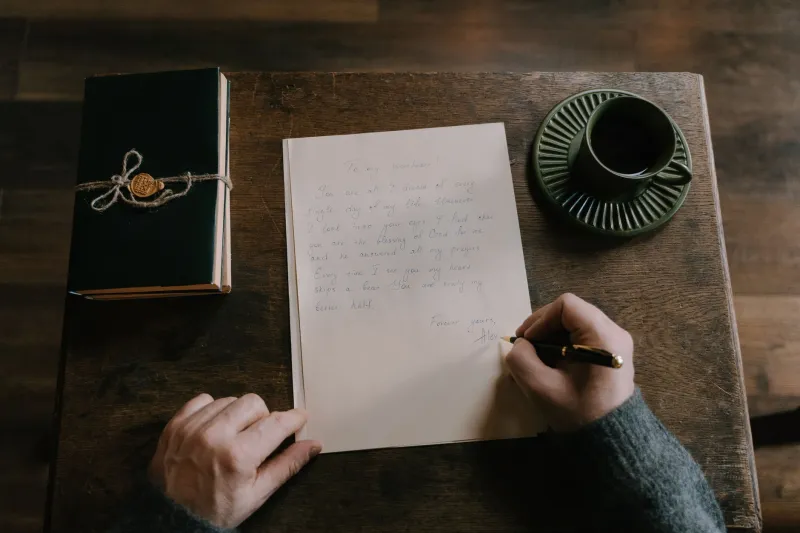
There is a particular sort of quiet that falls over a classroom when thirty Year 4 pupils are told to write a letter by hand. Pens hover. Someone asks whether they can use a rubber. Someone else wants to know if they have to spell “extraordinary” correctly. And then, gradually, the room settles into the scratch-and-rustle rhythm of people actually thinking about another human being.
That is the small magic behind a pilot that has been taking shape in Penarth this autumn: pairing primary classrooms with local care homes through old-fashioned, handwritten letters. No video call. No shared login. No app to download. Just paper, an envelope and a reason to choose your words carefully.
The idea is not complicated, which is precisely why it works. A class is matched with a group of residents. Pupils write an introductory letter – name, age, favourite thing about living in Penarth, one question – and residents write back. Letters travel via the school and the care home, never between home addresses. Teachers and activity coordinators read them first. Then the replies arrive, and the learning quietly gets on with itself.
Why a letter beats a worksheet
Literacy teaching is full of worthy tasks, but few of them come with a real audience. A letter changes that. Pupils know someone will read their handwriting, so they try harder with it. They know a question needs an answer, so they think about what makes a good one. They learn that a paragraph can be a small act of kindness rather than a box to tick.
For residents, the benefits are just as tangible. Care home staff often talk about the value of purposeful activity – something that gives shape to a morning and a reason to recall details from a life. Writing back to a child does exactly that. It prompts memories of school days, seaside holidays, first jobs, favourite songs and the sort of everyday Penarth history that rarely makes it into a textbook.
And then there is the empathy bit, which is harder to measure but impossible to miss. Children begin to understand that older people are not a category or a project. They are individuals with opinions about dogs, weather, rugby and whether pineapple belongs on a pizza. The residents, meanwhile, get to be curious about someone else’s world rather than simply receiving another timetable of activities.
How the pilot actually runs
The scheme is deliberately low-tech and light-touch. Each participating class is given a simple structure: three letters across a term, with a four-week gap between sending and replying. Teachers use the first letter as a literacy lesson – drafting, editing, handwriting, asking questions – and the second as a follow-up that responds to what came back. The third is often a celebration letter, perhaps with a drawing or a pressed leaf from a local walk.
Care home coordinators gather residents who are interested, not residents who are simply available. That distinction matters. Some people will want to write pages; others will prefer to dictate while a staff member scribes. Both count. Letters can be large-print, short, funny, serious or full of questions. The only rule is that the child gets a reply that feels personal.
Safeguarding is built in from the start. Letters are read by staff before they are exchanged. Pupils use first names only and do not share addresses, phone numbers or school details. If a child asks a question that is too personal, the teacher can redirect it before it is sent. The care home does the same at its end. It is not complicated, but it does need a named lead at each setting – one teacher and one activity coordinator who can chase replies and keep the rhythm going.
What pupils and residents gain
Teachers involved in the pilot have noticed the usual things you would hope for: better stamina in writing, more careful handwriting, fewer one-word answers. But they have also noticed something less expected. Children who are usually reluctant writers will often put more effort into a letter than into a story, because a letter has a job to do. It is not being marked for a level; it is being read by a person.
Residents, meanwhile, report feeling useful. That sounds small, but it is not. Being asked your opinion by a nine-year-old is a genuinely lovely thing. One resident apparently spent three days deciding whether to describe Penarth Pier as “bracing” or “beautiful”, and then used both. Another sent a recipe for Welsh cakes with a note saying the child should ask an adult to help with the frying pan. These are the details that make a community feel like a community.
Could your street do the same?
The beauty of this pilot is that it does not need a big budget or a new building. It needs two willing settings, a box of envelopes and someone to keep the diary. A primary school and a care home are the obvious pairing, but the model could work between a secondary English class and a sheltered housing scheme, a home-education group and a local library, or a youth club and a retirement living complex.
If you are tempted to try it in your own town, start small. One class. One group of residents. Six weeks. Agree the safeguarding rules in writing before the first letter goes out, and make sure both sides know who reads what before it is exchanged. Keep the letters coming through a single point of contact at each end. And do not over-plan the content – leave room for the children to ask the odd, brilliant question that no adult would have thought of.
Penarth Library on Stanwell Road would make a natural drop-off point for a wider version of the scheme, and the seafront has no shortage of care homes within walking distance of primary schools. But the real ingredient is simpler than geography. It is the willingness to slow down enough to write to a neighbour you have not met yet.
In a year when so much of our learning is done at speed, on screens, with notifications pinging, there is something quietly radical about a stamped envelope. It says: you are worth the wait. For Penarth’s pupils and residents, that lesson is already arriving – one letter at a time.